.png)
Bed Bug Control in Cleveland, Ohio
Cleveland and Cuyahoga County frequently rank among the nation’s most active regions for bed bug remediation. The mix of historical multi-family housing, dense urban neighborhoods, healthcare hubs, and high residential rental density creates clear challenges for containment. Eco Pest Controls links Cleveland homeowners, landlords, and tenants with independent, verified pest control professionals. This resource explains early detection, Ohio tenant obligations, state license verification, and safe prep protocols.
Who performs the remediation
Eco Pest Controls is an independent referral directory and support resource. We connect property owners and residents with prescreened, licensed local exterminators across Cuyahoga County. The independent contractors, not Eco Pest Controls, execute all inspections, heat treatments, and applications, and Eco Pest Controls does not directly warrant their field work. Ensure you verify licensing and insurance prior to booking service.
Factors contributing to bed bug spread in Greater Cleveland
Cleveland’s historical architecture and busy transit centers facilitate the spread of bed bugs between structures and units:
- Older multi-family housing stock. Historic double-houses, classic brick multi-suites in Lakewood, and multi-story rental properties in Ohio City and Detroit-Shoreway feature shared plumbing chases, radiator conduits, and common wall voids that allow pests to migrate between homes.
- Regional healthcare and academic turnover. High housing mobility around University Circle, Cleveland Clinic, University Hospitals, and Cleveland State University leads to frequent seasonal turnover and furniture reassignment.
- High-volume transit corridors. Cleveland Hopkins International Airport, regional bus networks, and downtown convention and sports destinations (Rocket Mortgage FieldHouse, Progressive Field, Huntington Convention Center) welcome travelers whose personal luggage can harbor unnoticed pests.
- Secondhand goods and furniture recycling. Moving curbside items or pre-owned furnishings without prior high-heat quarantine remains one of the primary vectors for household introductions.
Identifying genuine bed bug activity
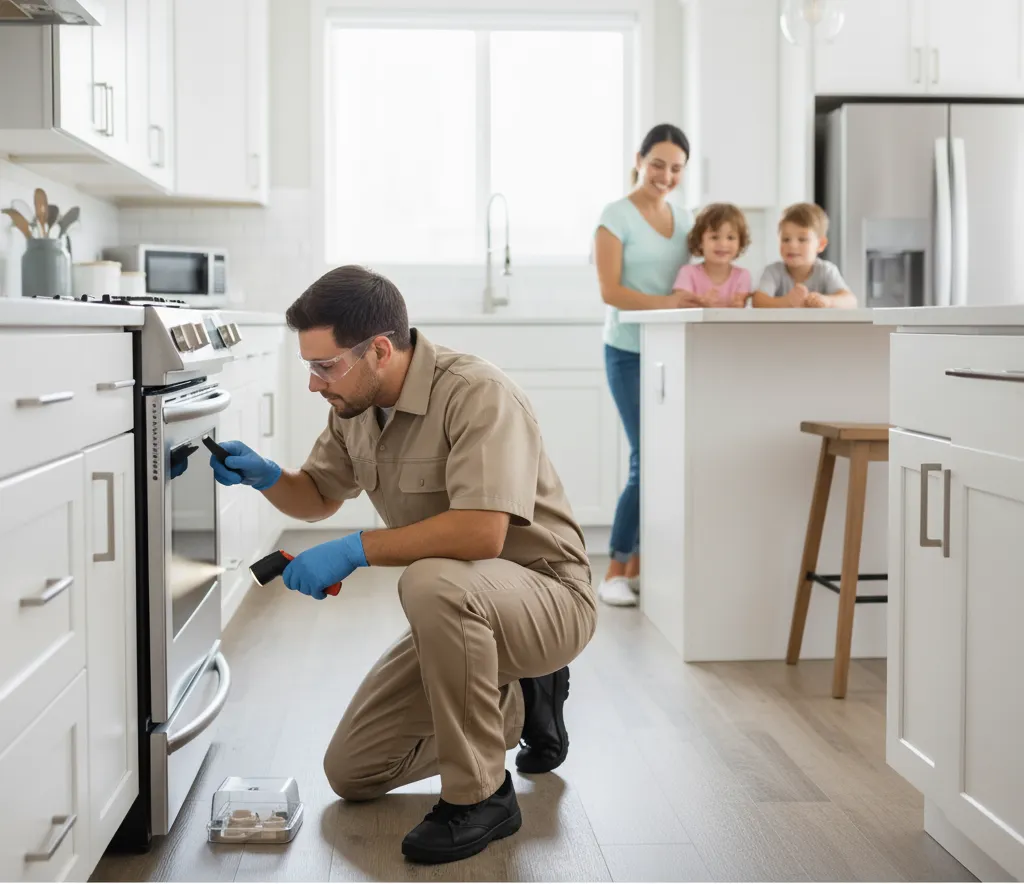
Skin marks or irritations are insufficient for confirmation, as physiological reactions vary widely and often mimic flea bites or dermatitis. Inspect for physical evidence: small black or rusty-red fecal spots embedded in fabric, translucent discarded exoskeletons, tiny pearl-white egg clusters, and live reddish-brown insects about 5 mm in length. Focus your check on mattress welt cords, box spring corner protectors, headboard anchor screws, electrical faceplates, and adjacent baseboards. Preserve suspected specimens in clear tape or a sealed bag for professional confirmation. For detailed visual guides, review our in-depth bed bug guide.
Renter guidelines for Cleveland & Ohio law
Under Ohio Revised Code (§ 5321.04), landlords are required to maintain rental units in a fit and habitable condition and adhere to applicable local building, housing, and health codes. The Cuyahoga County Board of Health and local housing courts recommend taking systematic steps when dealing with pests:
- Report any bed bug sighting to property management promptly in writing (email, certified mail, or formal maintenance portals) and document all records and photos.
- Avoid using over-the-counter foggers or total-release aerosols. These products lack residual depth, emit volatile organics, and cause insects to disperse deeper into floorboards and neighboring apartments.
- Review your lease agreement. Ohio law mandates habitability, but responsibilities regarding extermination invoices can depend on building structure type, lease clauses, and evidence of introduction.
- Cooperate fully with mandatory staging guidelines and permit entry for scheduled multi-unit inspections.
This overview provides factual industry context and does not constitute formal legal representation. For disputes, contact The Legal Aid Society of Cleveland or the Cleveland Housing Court specialist clinic.
Verifying Ohio pesticide application credentials
In Ohio, commercial pest control companies and technicians applying pesticides for hire must hold certification from the Ohio Department of Agriculture (ODA) Division of Plant Health. Structural pest remediation falls specifically under Commercial Category 10a (General Pest Control). Before contracting any service:
- Request the applicator's or business's ODA license number and confirm current status through the Ohio Department of Agriculture licensing directory.
- Request proof of active commercial liability insurance and current worker's compensation certificates.
- Obtain a detailed service scope clarifying treatment methodologies (heat thermal treatment vs. chemical residual barriers vs. steam) and follow-up visit timelines.
- Inquire whether adjoining units (above, below, and adjacent) will undergo simultaneous inspection to prevent re-infestation.
- Exercise caution regarding providers demanding total cash payments upfront or guaranteeing complete eradication after a single unmonitored visit.
Elements of an effective treatment protocol
- Detailed inspection. A licensed specialist surveys primary sleep areas, living room seating, cracks in baseboards, and void areas to establish infestation severity.
- Client prep execution. Residents follow an organized checklist covering hot-water laundering, heat-drying cycles, decluttering, and vacuuming perimeters.
- Multi-method remediation. Effective treatment plans often blend modalities: localized high-temperature steam or thermal chamber heat, insect growth regulators (IGRs), desiccant dusts in wall plates, and targeted residual applications.
- Scheduled follow-up inspection. Because eggs are insulated against many contact sprays and can incubate over 7 to 14 days, a second assessment at the 2-to-3-week mark verifies complete control.
Preparing your Cleveland residence for service
- Strip all bed linens, blankets, and pillow protectors; wash and run through a high-heat dryer for at least 30 minutes, then seal items in clean plastic bins or heavy contractor bags.
- Vacuum carpets, rugs, baseboard tracks, bed frames, and sofa cushions; immediately empty the vacuum canister into a plastic bag, seal it, and dispose of it in an outdoor trash container.
- Pull dressers, nightstands, and beds at least 12 inches away from perimeter walls to give technicians full access to baseboards.
- Continue sleeping in designated bedrooms rather than relocating to sofas or other rooms, which draws pests into unaffected living areas.
- Do not discard mattresses or box springs without consulting your exterminator; high-grade encasements often salvage furniture safely and avoid spreading pests through common stairwells.
Frequently asked questions: Cleveland bed bugs
Does Eco Pest Controls perform the direct chemical application?
No. Eco Pest Controls provides an informational directory and referral service that matches homeowners and renters with licensed local pest control operators across Cleveland and Cuyahoga County. Independent contractors handle all treatments and diagnostics.
How can I verify if an Ohio pest operator is licensed?
You can verify commercial credentials through the Ohio Department of Agriculture (ODA) Division of Plant Health. Operators handling indoor structural pest issues must hold active licensing under Category 10a (General Pest Control).
Can a tenant withhold rent in Cleveland due to bed bugs?
Ohio law does not permit tenants to simply withhold rent payments. Instead, tenants must provide written notice giving reasonable time to remedy, after which they may explore placing rent into an escrow account through the Cleveland Municipal Housing Court pursuant to R.C. 5321.07.
What is the difference between thermal heat and chemical treatments?
Thermal remediation heats rooms to 120°F–135°F, neutralizing all life stages including eggs in one intensive day. Chemical programs rely on targeted insecticides and insect growth regulators; they are cost-effective but typically require two or more applications to eliminate newly hatched nymphs.
Why do store-bought bug bombs make infestations worse?
Aerosol foggers release product upward into the center of a room rather than penetrating deep into structural harborages. The pyrethroid repellents frequently flush bed bugs outward into surrounding rooms and neighboring apartments.
How long does a complete bed bug eradication plan take?
While thermal heat treatment can remediate active spaces in a single day, integrated chemical programs generally take between two and four weeks across multiple structured visits to guarantee elimination.
Inquire about local bed bug help in Cleveland
Provide details on your property layout, single-family or apartment status, and current signs of activity. We will route your inquiry to experienced, licensed professionals servicing Cuyahoga County.